
Post: Grid Outages Are Increasing: Is Your Business Prepared?
Post Categories
- Battries
- Battery Energy Storage System
- BESS
- Best Inverter Battery for Home
- Cells
- DMEGC Cells
- E - Rickshaw Battery
- Electric Vehicle Battery Manufacturers
- Energy Storage Solutions
- EV Battery
- EV Battery Manufacturers in India
- High Voltage ESS Battery Manufacturer
- Highpower Prismatic Cells
- Highstar Prismatic Cells
- Inverter Lithium Batteries
- Lithium Batteries
- Lithium Battery Manufacturers in India
- Lithium Cells
- Low Voltage ESS Battery Packs
- Manufacturing
- News
- Smart BMS
- Uncategorized
Recent Posts
Questions Every Buyer Should Ask Before Purchasing an ESS
September 22, 2026
No Comments
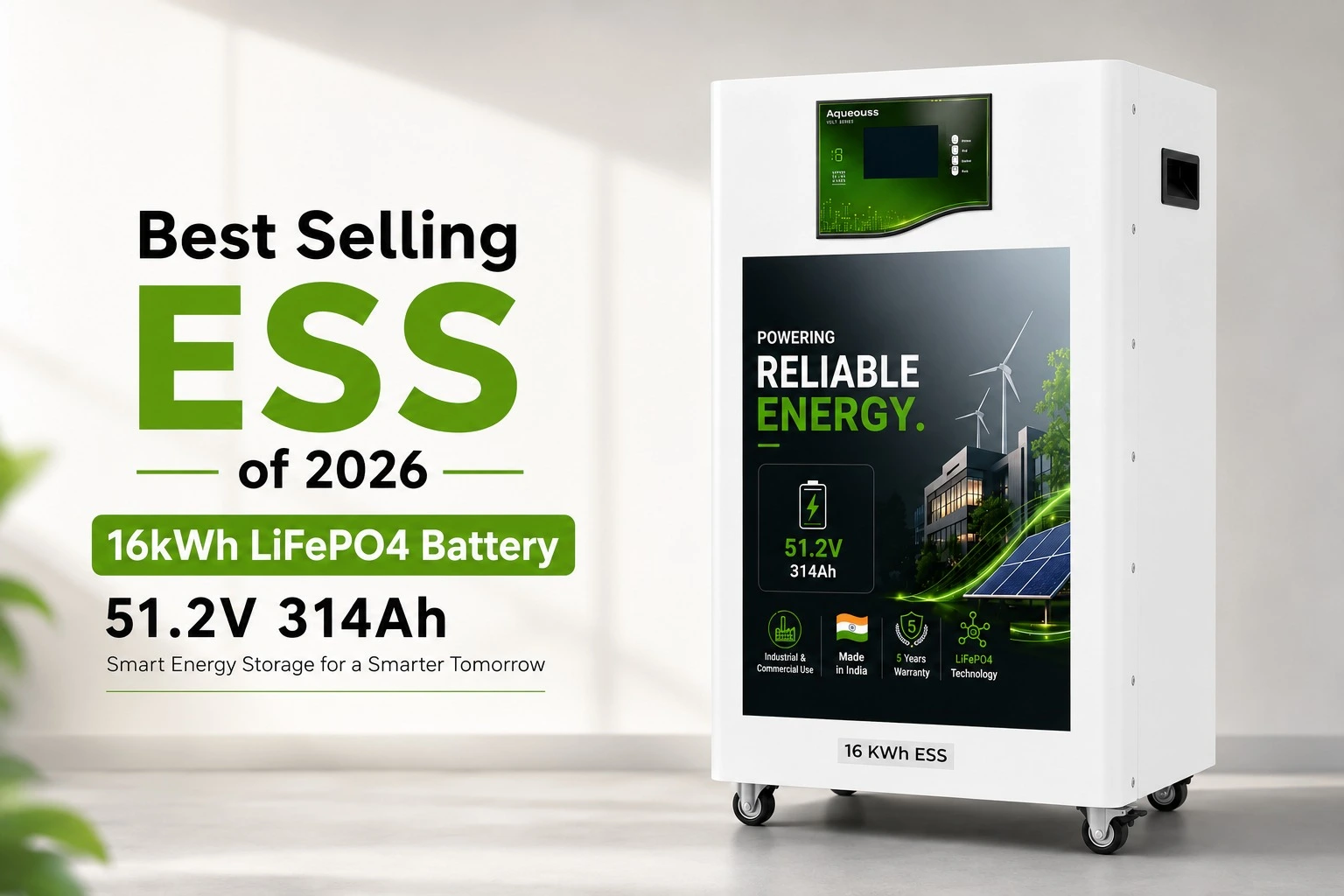
Best Selling ESS of 2026 – 16kWh 51.2V 314Ah LiFePO4 Battery
July 22, 2026
No Comments
Grid Outages Are Increasing: Is Your Business Prepared?
- Admin
- July 17, 2026
- 6:15 am
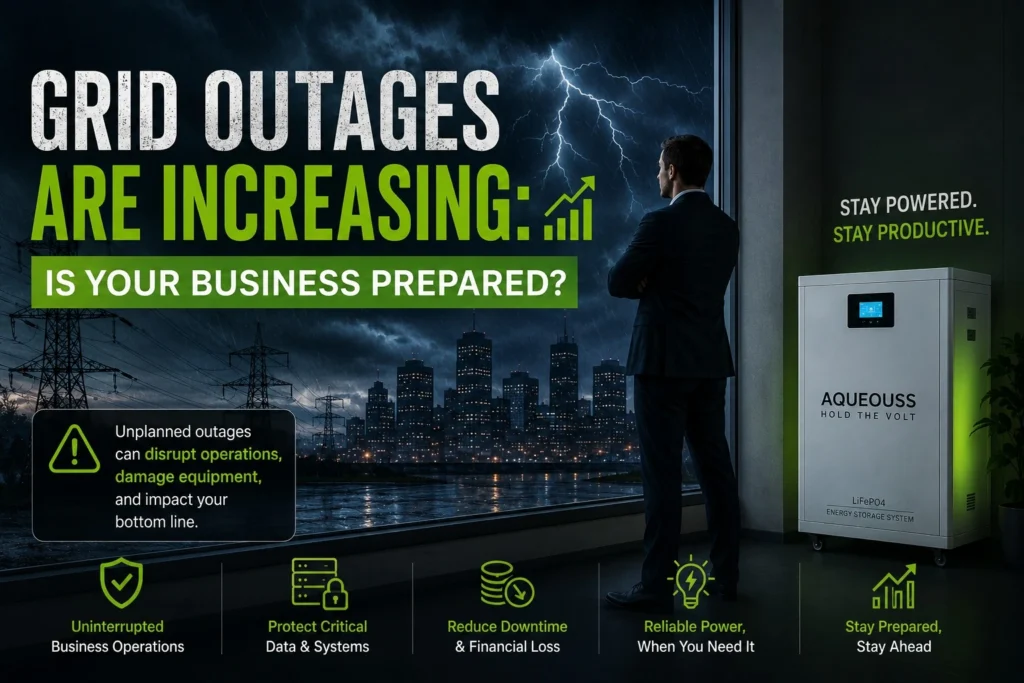
It usually starts with a flicker.
The lights blink. Computers restart. Machines stop halfway through a job. Customers wait while staff scramble to figure out what happened. A few minutes later, the power returns—but the disruption has already cost time, money, and credibility.
For many businesses, grid outages are no longer rare events. Whether they’re caused by extreme weather, overloaded infrastructure, maintenance work, or unexpected faults, power interruptions have become an operational challenge that business owners can’t afford to ignore.
The real question isn’t whether another outage will happen. It’s whether your business is prepared when it does.
What Happens When the Power Goes Out?
At first glance, a short outage may not seem like a major issue.
The reality is that even a few minutes without electricity can affect far more than your lights.
A retail store may lose sales because billing systems stop working. An office can experience interrupted meetings and lost productivity. A warehouse might face delays in inventory management, while a manufacturing facility could lose an entire production batch if machines shut down unexpectedly.
Many buyers only calculate the cost of electricity. They rarely calculate the cost of interrupted business.
Can Your Business Continue Operating?
This is a question worth asking.
Take a moment to think about your daily operations.
Which equipment absolutely must remain powered?
For some businesses, it’s servers and internet connectivity. For others, it’s refrigeration units, security systems, CNC machines, medical equipment, or production lines.
Understanding your critical loads is the first step toward choosing the right Energy Storage Solution instead of simply buying the largest battery available.
Is a Generator Still Enough?
For years, diesel generators were the default backup solution.
Many buyers assume they’re still the best option.
But generators have their own challenges. They require fuel, regular servicing, produce noise and emissions, and often take time to start after a power failure.
An Energy Storage System (ESS), on the other hand, can provide almost instant backup for essential equipment. In many applications, it works alongside solar power or generators to create a more reliable and efficient backup strategy.
The goal isn’t necessarily to replace every existing system—it’s to build a smarter one.
How Much Downtime Can You Afford?
Here’s where things get interesting.
Not every business loses money in the same way during an outage.
A small café may lose customers during lunchtime.
A hospital can’t afford interruptions to critical equipment.
An IT company may face missed deadlines if servers shut down unexpectedly.
A factory may lose hours of production restarting machines and recalibrating equipment.
When you compare these losses with the investment in a Battery Energy Storage System, the conversation often changes from “How much does it cost?” to “How much could an outage cost us?”
Can Solar and ESS Work Together?
If your business already uses solar panels—or plans to install them—an ESS becomes even more valuable.
Instead of relying solely on grid electricity after sunset, stored solar energy can continue powering essential operations.
This improves energy utilization while reducing dependence on the grid.
For many Commercial ESS installations, the combination of solar and battery storage delivers both backup power and long-term savings.
Is the System Safe and Reliable?
Power backup should provide confidence, not additional concerns.
Ask about battery chemistry, thermal protection, safety certifications, and the Battery Management System (BMS).
Many modern ESS Battery systems use LiFePO4 technology because of its long cycle life, excellent thermal stability, and dependable performance in demanding environments.
Just as important is choosing a manufacturer that provides quality installation and ongoing technical support.
Beyond Backup Power
An ESS isn’t only about surviving blackouts.
Many businesses also use battery storage to improve energy management, reduce dependence on expensive peak-hour electricity, maximize solar energy usage, and strengthen operational resilience.
For some companies, the greatest benefit isn’t visible on the electricity bill—it’s the confidence that operations can continue even when the grid cannot.
Recommended ESS Solutions for Businesses
For most commercial and industrial applications, High Voltage ESS is the preferred choice due to its higher efficiency, scalability, and ability to handle larger power demands. Popular options include 9.6kWh (96V 100Ah), 12kWh (120V 100Ah), 24kWh (240V 100Ah), and 38.4kWh (384V 100Ah) LiFePO4 ESS Batteries. For small and medium businesses, the 16kWh (51.2V 314Ah) Low Voltage ESS Battery remains one of the best-selling solutions, offering reliable backup, excellent solar compatibility, and long-lasting performance.
Final Thoughts
Grid reliability remains outside your control, but your preparedness doesn’t have to be.
Whether you operate a retail store, office, factory, warehouse, healthcare facility, or commercial building, having a dependable Energy Storage System means you’re planning for continuity rather than reacting to interruptions.
The best ESS isn’t simply the biggest battery or the lowest-priced option. It’s the one that keeps your essential operations running, supports your future growth, and gives your business the confidence to face unexpected power outages without missing a beat.